
You’re driving through Sacramento on a 95-degree afternoon, and your Tesla throws a “Speed Limited” warning on the touchscreen. Maybe four alerts pop up at once. The AC starts feeling weaker than it should. You assume the worst — battery issues, expensive repairs, a long wait at the service center.
Most of the time, it’s none of that. It’s a clogged condenser, and it costs far less to fix.
What We Actually See in the Shop
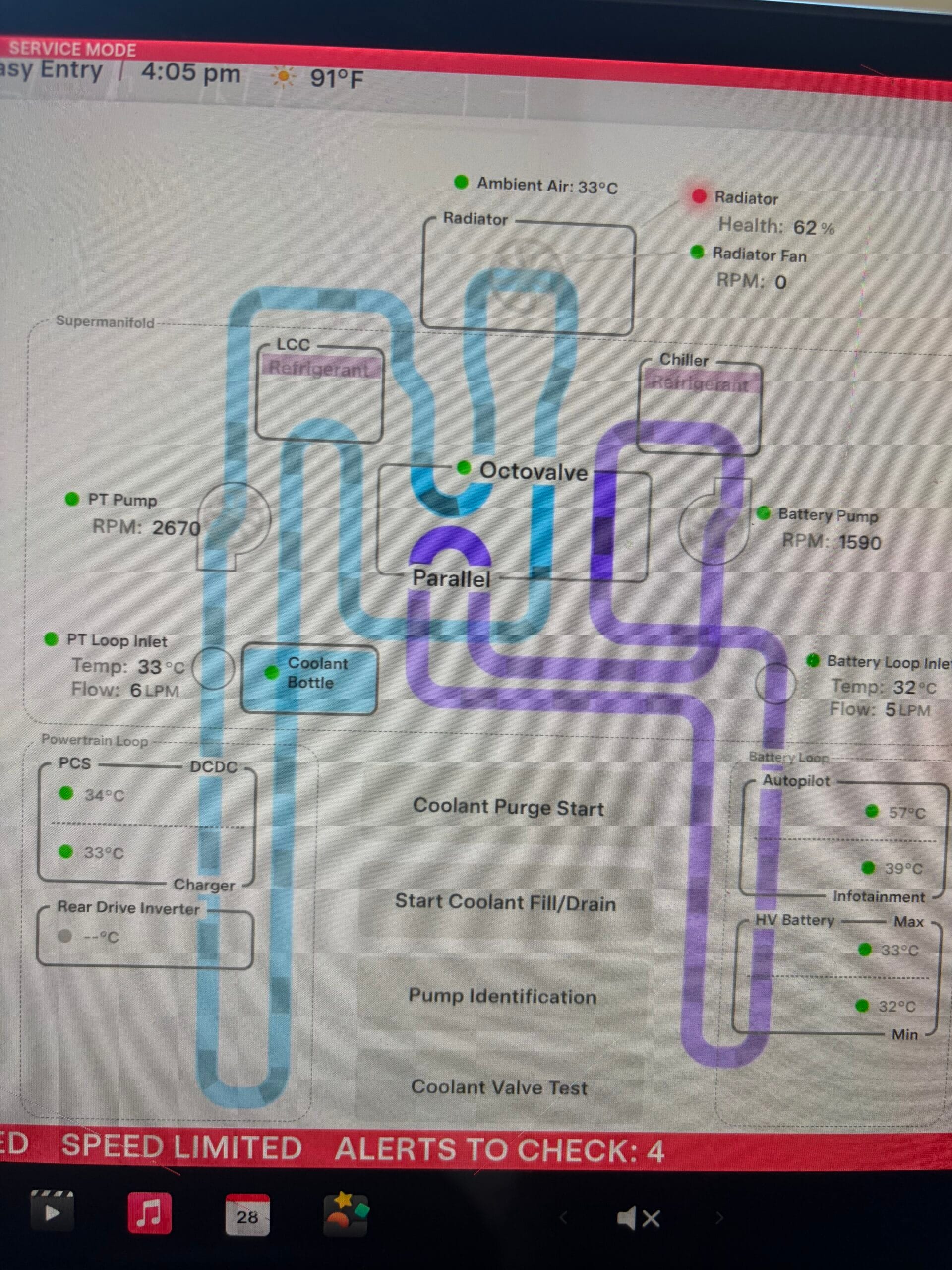
When a Tesla comes in with this complaint, one of the first things we do is pull up Service Mode — a diagnostic screen built into every Tesla that shows real-time data on every thermal loop in the car. The most telling number is Radiator Health %.
We had a car come in recently showing 62% Radiator Health. The radiator fan was reading 0 RPM. “Speed Limited” across the bottom of the screen. Four alerts to check.
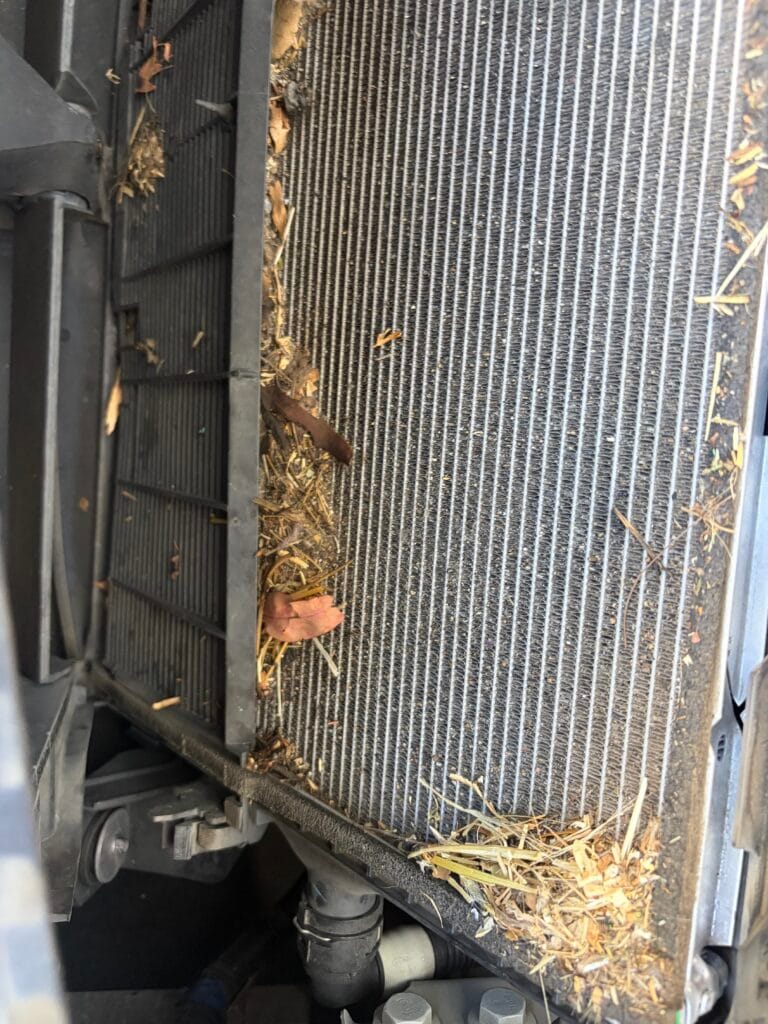
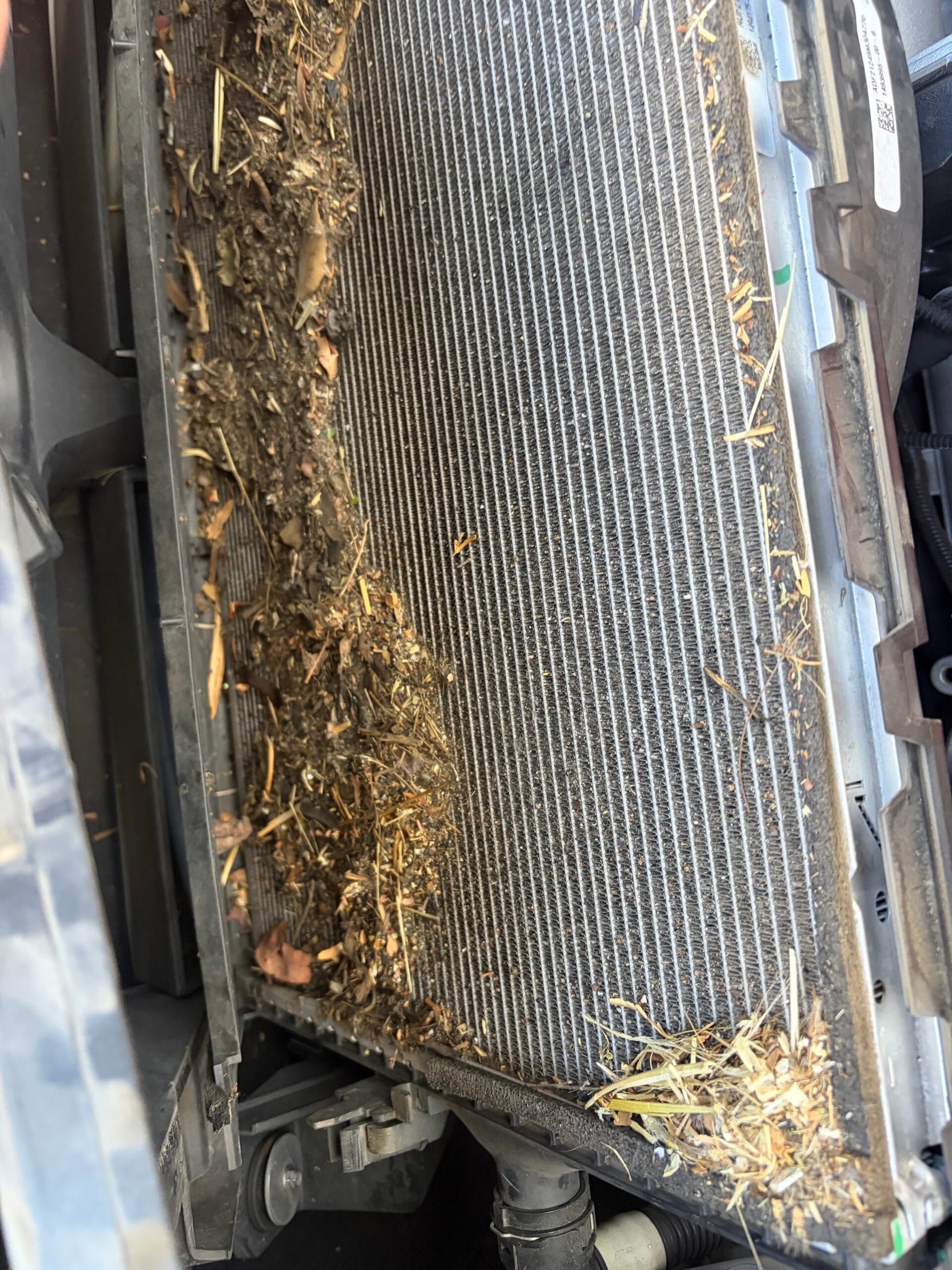
When we lifted the front section and looked at the cooling stack, this is what we found: the AC condenser — which sits directly in front of the main radiator — was completely packed with leaves, pine needles, dry grass, and compacted dirt. Solid enough to block most of the airflow through the fins.
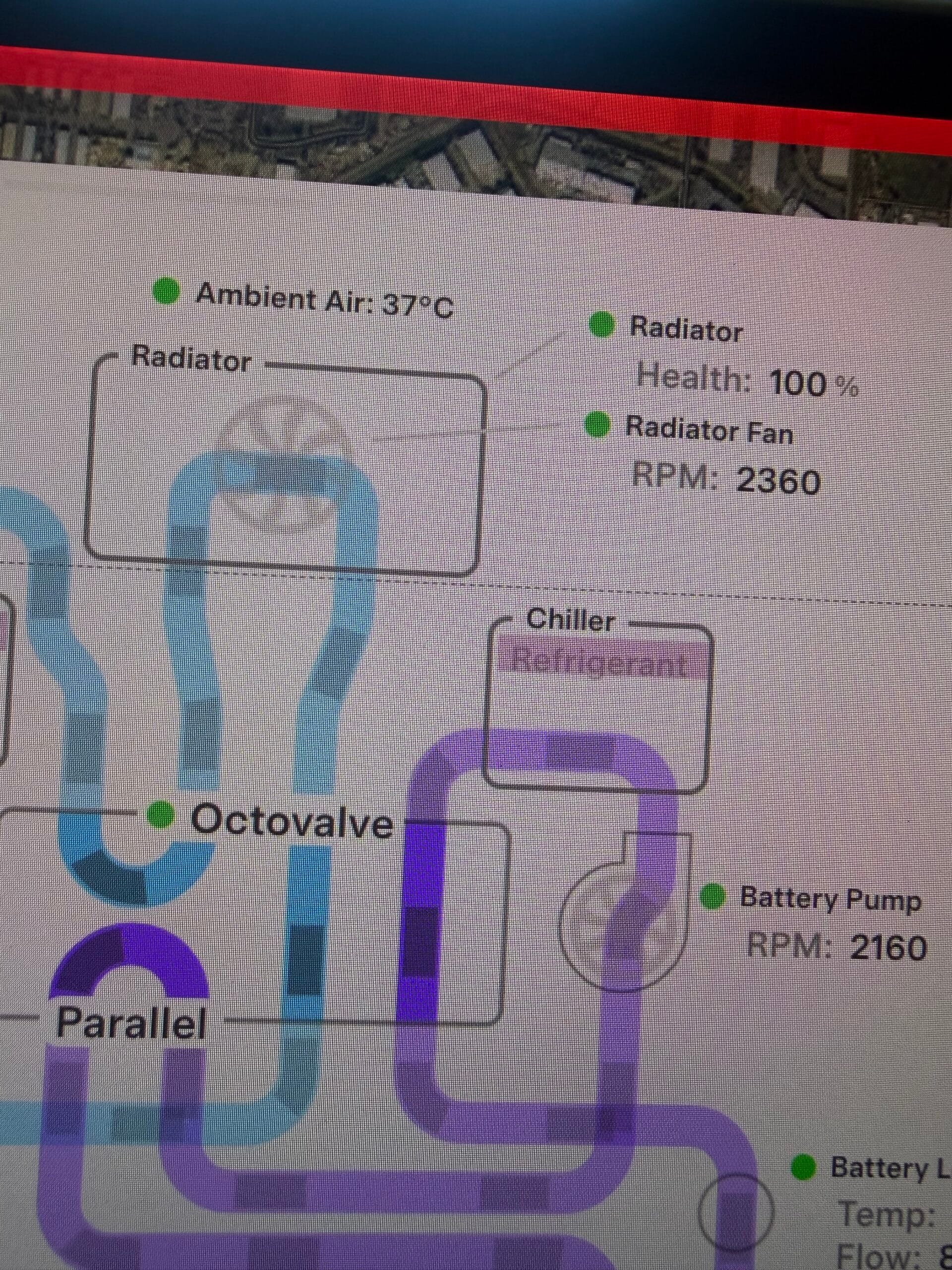
After about an hour of cleaning, Radiator Health read 100%. Fan RPM was back at 2360. All alerts cleared. No parts replaced.
Why Tesla Vehicles Are Especially Prone to This
Most cars have a single radiator with a condenser in front. Tesla’s cooling system is significantly more complex — the same front cooling stack handles battery thermal management, cabin air conditioning, powertrain cooling, and charge rate regulation, all coordinated by a component called the Octovalve.
That integration is what makes Teslas so efficient. But it also means a debris blockage at the condenser affects everything at once, not just the cabin temperature.
The physical design adds to the problem. The AC condenser and the main radiator have a narrow gap between them. Leaves and pine needles get pulled in by the fan and pack tightly into that gap over time. Sacramento’s oak and pine trees, combined with dry summer air that carries a lot of airborne debris, make this a common issue here specifically.
What the Car Is Actually Doing When It Says “Speed Limited”
Tesla’s battery management system constantly monitors how much heat the car can shed. When Radiator Health drops, the BMS knows its thermal headroom is reduced. Rather than risk overheating the battery or drive components, it limits power output — hence “Speed Limited.”
The fan can’t fix this on its own. You can spin a fan at full speed, but if there’s a physical wall of leaves blocking the airflow, the air has nowhere to go. That’s why the fan RPM sometimes reads low even though the system is trying to compensate.
The Longer You Wait, the More It Costs
A clogged condenser makes your AC compressor work significantly harder. Tesla owner forums have documented multiple cases of compressor failure traced directly to long-term condenser blockage — with repair estimates around $4,000 or more.
A condenser cleaning is a fraction of that. If your car has been running with reduced Radiator Health for multiple Sacramento summers, it’s worth having the system inspected before the compressor shows the strain.
Signs You Should Get This Checked
- “Speed Limited” appears during or after driving in hot weather
- 3 or more system alerts you can’t explain
- AC output feels noticeably weaker than last summer
- Supercharging speed seems slower than usual in high temperatures
- You can hear the fans working extra hard even at lower speeds
You can also check Radiator Health yourself: Controls → Service → Service Mode → Thermal section. Anything below 100% is worth looking at. Below 80% and you’ll likely start seeing symptoms.
What the Cleaning Involves
We remove the active grille shutter to access the front of the cooling stack, extract the packed debris from the condenser-radiator gap, and clean the fin faces with compressed air. Then we verify in Service Mode that Radiator Health is back to 100% and fan operation is normal before the car leaves the shop. The whole job typically takes 1–2 hours. No parts needed in most cases.
Sacramento Summers Are Hard on Teslas
When ambient temperatures are consistently in the 95–105°F range from June through September, your Tesla’s thermal system is already working near its limit. A condenser running at 62% efficiency leaves almost no margin for a long drive or a fast charge. Getting this cleaned before summer’s peak is the easiest way to keep your Tesla running at full capability when you actually need it.
AT Automotive is an independent Tesla repair shop in Sacramento at 8561 Weyand Ave. We diagnose and service Tesla vehicles without service-center wait times or service-center pricing. For condenser cleaning, Tesla battery diagnostics, or any other Tesla work, call us at (916) 957-6884 or schedule online.
See our full list of Tesla repair services in Sacramento or learn more about our Tesla condenser cleaning service.