
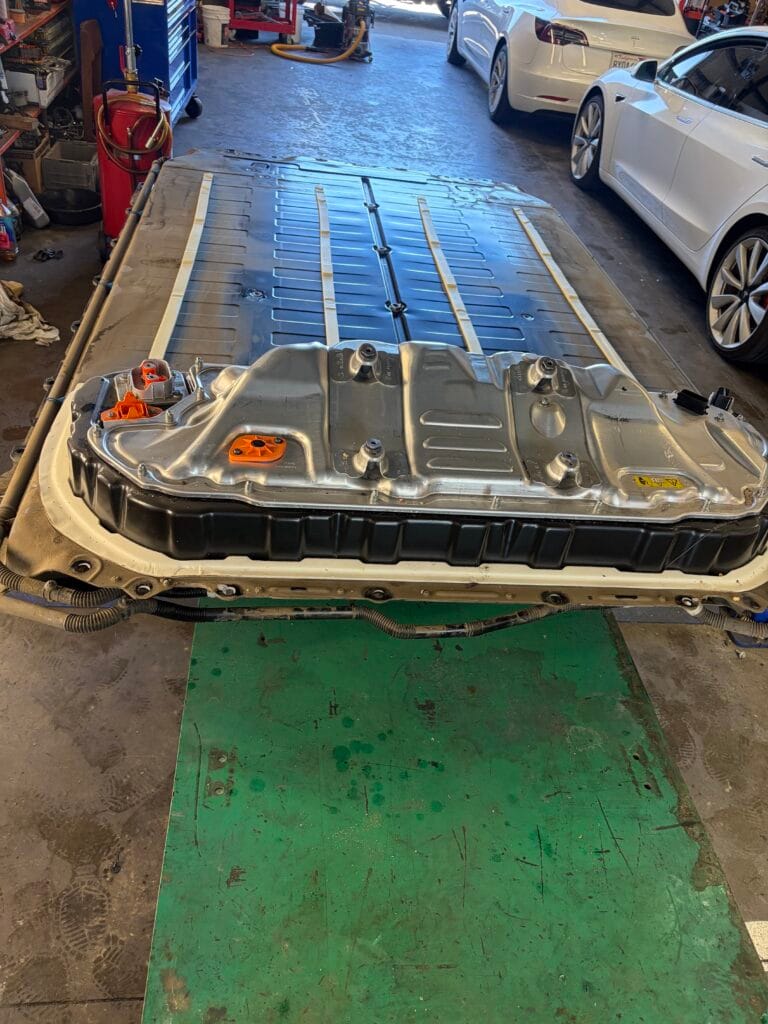
Tesla Model 3 and Y batteries are designed to last — but they’re not immune to degradation. Over time, every lithium-ion battery loses some capacity, and some packs fail earlier than expected due to cell imbalance, thermal stress, or manufacturing variation. Knowing the signs early gives you more options and usually means a less expensive fix.
How Much Range Loss Is Normal?
Tesla’s own data suggests most Model 3 and Y packs retain around 90% of their original capacity after 200,000 miles under typical conditions. Real-world results vary — some owners see faster degradation, some slower. A loss of 10–15% over the first 5 years is common and generally not a cause for alarm. Where it becomes a problem is when degradation accelerates beyond that, or when other symptoms show up alongside range loss.
Warning Signs That Go Beyond Normal Wear
Range loss alone doesn’t always mean the battery is failing. But these signs together — or any one of them appearing suddenly — are worth investigating: charging that consistently stops below your set limit without explanation, charge times that have gotten noticeably longer, performance limits or reduced power in normal driving conditions, BMS warning messages in the Tesla app or on the display, and visible swelling or damage to the underside of the vehicle.
The Tesla App Doesn’t Tell You Everything
The Tesla app shows you estimated range and charge percentage, but it doesn’t give you the detailed battery health picture that a proper BMS diagnostic does. Cell voltage balance, individual module health, pack temperature history — none of this is visible in the app. If you suspect your battery is degrading faster than it should, a shop with the right diagnostic tools can pull the actual BMS data and give you a real picture of what’s happening inside the pack.
What Your Options Are
If diagnostics show a genuine problem, you have a few paths. Some cell-level issues can be addressed without replacing the entire pack — this is worth exploring before committing to a full replacement. If the pack itself needs to go, you can choose between a new OEM-equivalent pack or a quality-tested refurbished unit. Refurbished packs cost significantly less and, when sourced properly, perform well — but it’s important to understand the warranty and traceability of what you’re buying.
Tesla’s out-of-warranty battery replacement cost is high — often quoted in the $10,000–$20,000 range depending on configuration. Independent shops with direct experience handling these systems can often do it for significantly less, using either Tesla OEM parts or reputable alternatives.
HV Safety Is Not Optional
Tesla battery packs run at 350–400 volts. Any shop working on them needs proper HV certification, insulated tooling, and established procedures for safely isolating and discharging the system. If a shop doesn’t regularly work with EV high-voltage systems, this is not the job to learn on. Make sure whoever touches your pack has real experience with it.
Get a Straight Answer in Sacramento
AT Automotive works on Teslas daily. If your Model 3 or Y has battery concerns, we’ll run the diagnostic, show you what the data says, and give you an honest recommendation — not a parts recommendation based on what makes us the most money. If your battery is fine, we’ll tell you that too.